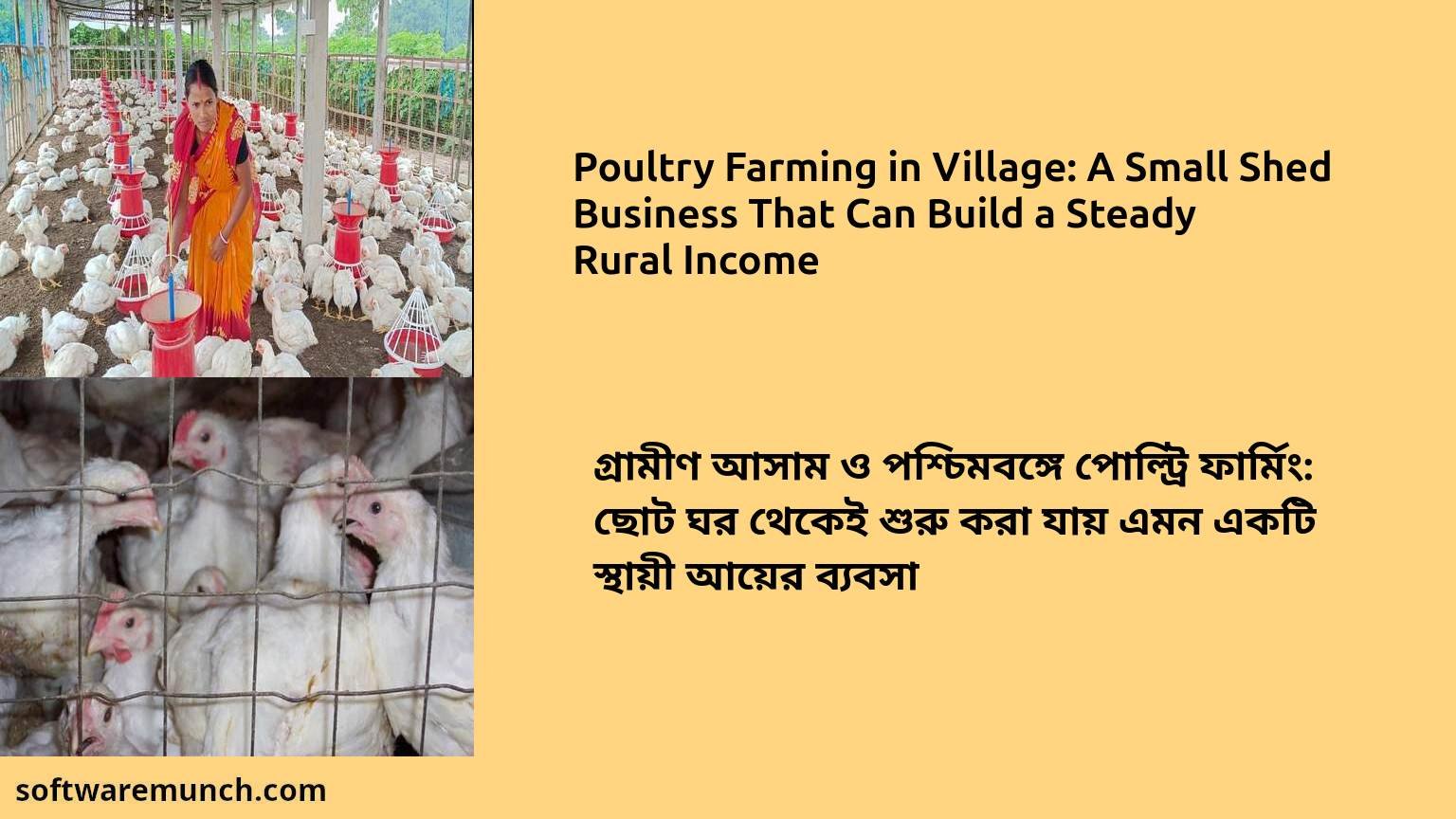
In rural Assam and West Bengal, poultry farming is not something new. Almost every village household has raised chickens at some point, either for eggs or meat. Earlier it was mostly for home use, but today poultry farming has become a proper business that can support a rural family with regular income.
The biggest advantage of poultry farming is that it does not need large land. A small shed, backyard space, or bamboo structure is enough to start. Across places like Barak Valley in Assam and districts such as Malda, Murshidabad, Nadia, Cooch Behar, and Jalpaiguri in West Bengal, small poultry units are slowly changing rural livelihoods.
Many villagers still say in simple terms, “murgi palon-e taka ache” — there is money in poultry farming if it is done properly.
Starting Small is the Smartest Way
Poultry farming does not require a big investment in the beginning. Many farmers start with just 20 to 50 birds. Some start with local country chickens, while others begin with broiler or layer farming depending on their goal.
Country chickens grow slower but fetch higher prices in the local market because of taste and demand. Broilers grow very fast and can be sold within 40 to 50 days, which gives quick cash flow. Layer birds are mainly raised for egg production, which provides a steady daily or weekly income.
For beginners, starting small is always safer. It helps them learn feeding, vaccination, disease control, and market behavior before scaling up.
A Real Village Experience
In a village in Karimganj district of Assam, a farmer named Rafiqul started poultry farming with just 30 country chickens. He had no formal training and very little knowledge in the beginning.
He often says, “shuru te bujhi nai, pore dhire dhire shikhechi” — I did not understand much in the beginning, but I learned slowly over time.
In the first few months, he struggled because he did not know about proper feed balance and vaccination schedules. Some birds died due to diseases, and profits were low. Later, he attended a training program at Krishi Vigyan Kendra, where he learned proper poultry management.
After applying what he learned, his farm improved significantly. Today, he manages around 200–300 birds and supplies eggs and chickens to local markets and small hotels. His income is now much more stable compared to earlier village work.
His journey shows that poultry farming is not about starting big, but about learning and improving step by step.
Types of Poultry Farming
There are mainly three types of poultry farming commonly followed in rural areas.
Country chicken farming is popular because it requires less maintenance and has strong market demand. Broiler farming is suitable for quick income cycles, as birds reach market size in a short period. Layer farming focuses on egg production, providing continuous income throughout the year.
Many farmers combine two or more systems to balance quick returns and steady income.
Basic Setup and Investment
Poultry farming can be started with moderate investment. The basic requirements include a small shed, chicks or young birds, feed, water containers, and basic medicines or vaccines.
The shed can be made using bamboo, wood, or low-cost materials depending on village availability. Proper ventilation and cleanliness are important to keep birds healthy.
Feed is one of the biggest costs. Farmers usually use maize, rice bran, soybean meal, and commercial poultry feed. A proper feeding schedule ensures faster growth and better egg production.
Vaccination is also important to prevent diseases, especially in hot and humid climates like Assam and West Bengal.
Step-by-Step Use of Government Support
Government support plays an important role in poultry farming, especially for small farmers. However, many rural people are not fully aware of how to access these benefits.
The first step is visiting the local Animal Husbandry or Livestock office at the block level. Officers there provide information about ongoing schemes, subsidies, and poultry development programs.
The second step is attending training programs. Krishi Vigyan Kendras and government departments often organize free or low-cost training sessions on poultry management, disease control, feeding techniques, and shed construction.
The third step is applying for a Kisan Credit Card or livestock loan. This loan can be used for buying chicks, building sheds, purchasing feed, and managing initial costs. Most rural banks and public sector banks support such agricultural loans.
The fourth step is checking available subsidies. In many states, government schemes provide financial support for setting up small poultry units, especially for rural families, SHGs, and small farmers.
The fifth step is keeping all necessary documents ready, including Aadhaar card, bank details, and basic land or shed information. This helps speed up application processes.
Government support becomes truly useful when farmers actively visit offices, ask questions, and follow up regularly.
Daily Care and Management
Poultry farming requires regular attention. Birds need clean water, proper feed, and a hygienic environment. Even small negligence can lead to disease outbreaks.
Vaccination schedules must be followed properly. During rainy and hot seasons, extra care is needed because disease risk increases.
Clean sheds and proper ventilation help reduce mortality and improve growth.
Selling Eggs and Meat in Local Markets
Selling poultry products is generally not difficult in Assam and West Bengal due to steady demand.
Eggs can be sold in weekly village markets, local shops, and nearby towns. Chicken meat is in demand in both rural and urban areas, especially during festivals and weekends.
In towns like Silchar, Guwahati, Malda, Siliguri, and Berhampore, poultry products are sold throughout the year. Farmers who maintain good quality and regular supply often build long-term buyers such as shopkeepers, hotels, and restaurants.
Gradual Growth and Expansion
Poultry farming should be treated as a step-by-step business. Most successful farmers started small, learned through experience, and then expanded their operations.
A farmer may begin with a few dozen birds and later move to a larger shed with hundreds or even thousands of birds.
Reinvesting profits into better sheds, improved feed, and more birds helps grow the business steadily.
With patience, proper management, and consistent learning, poultry farming can become a reliable rural income source for families in Assam and West Bengal, supporting both daily needs and long-term financial stability.